
Curriculum
Our Year 5/6 Curriculum
Within Year 5/6, our curriculum is taught across the year through our three enquiries. The enquiries all have an overarching question which the children work towards answering through an authentic outcome. Our enquiries are developed by driving and enhancing subjects.
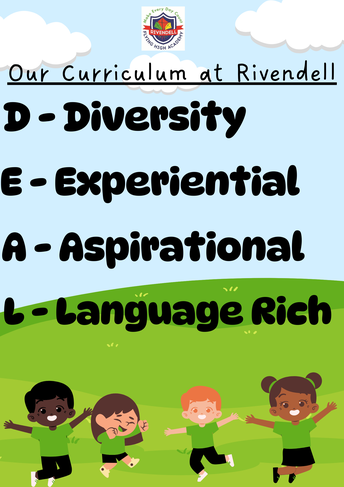
In addition, our enquiries connect to our DEAL curriculum principles and shape the way the enquiries are planned and delivered.
Our Year 5/6 Enquiries for 2024-25
Autumn Term - Do invasions always result in change?

Through this enquiry, our children will answer the question: Do invasions always result in change? They will learn about the Roman withdrawal from Britain in AD 410 and the invasions that followed: the Scots and Picts in the north, the Anglo-Saxons who settled and formed kingdoms, and the Vikings, whose raids began at Lindisfarne in AD 793. Children will compare, contrast and notice trends across these invasions, explaining their findings using precise historical terminology such as pillaged, Danelaw, Danegeld and piety. They will also investigate influential figures such as Alfred the Great, Guthrum, King Athelstan and Edward the Confessor, and explore the long struggle between the Anglo-Saxons and Vikings for the Kingdom of England.
Our enquiry begins with a visit to Perlethorpe Notts Outdoor Centre, where children will experience Anglo-Saxon life in the morning and Viking life in the afternoon, handling artefacts and wearing clothing from both periods.
Building on their knowledge from EYFS, KS1 and Lower KS2, our children will have already explored significant individuals, communities and events from beyond living memory, such as the Great Fire of London. They will also have developed an understanding of early civilisations, Roman Britain and themes such as monarchy and resistance. In Key Stage Two, the curriculum has introduced British history chronologically, beginning with the Stone Age in Year 3 and Roman Britain in Year 4, where children learned how the Romans invaded and how their empire shaped British society. In Year 5/6 Cycle 1, children studied modern invasions through World War II and considered how these events shaped the modern world.
Building on this knowledge, children in Year 5/6 will revisit the concept of invasion, examining the push and pull factors that brought the Anglo-Saxons and Vikings to Britain and the lasting changes they left behind, from place names and laws to beliefs and the monarchy. They will deepen their disciplinary understanding of cause and effect, significance and the use of sources, checking how reliable a source is and considering why historians do not always agree. As they progress into Year 7, pupils will go on to study the Norman Conquest of 1066 and its impact, learn to differentiate between interpretations of primary and secondary sources, and pursue their own historically valid enquiries. They will continue to use a wide range of evidence to construct and defend historically informed claims.
Throughout this enquiry, RE will enhance our learning as children explore how people’s beliefs about God, the world and others shape their lives. They will learn about the Five Pillars of Islam, the ways different religious leaders express their faith, Humanist and Atheist beliefs, and what sacred texts teach us. Linking closely to our history learning, they will discover how St Augustine brought Christianity to Anglo-Saxon Britain, how Anglo-Saxon Christians and Viking Pagans practised their beliefs, and how this relationship changed over time. Children will also consider how we can make Nottinghamshire a place of tolerance and respect.
English, Geography, Science and Computing will further enhance this enquiry.
– In English, children will read Beowulf by Michael Morpurgo, Anglo-Saxon Boy by Tom Bradman and Riddle of the Runes by Janina Ramirez, alongside Norse myths of Odin, Thor and Loki. They will write and perform Beowulf poetry for KS1, write a recount of their trip, a narrative inspired by Anglo-Saxon Boy, and a script for their podcast.
– In Geography, children will map the invasion routes of the Angles, Saxons, Jutes and Vikings, and investigate why the Anglo-Saxons chose not to settle in Roman-built towns.
– In Science, children will study forces, including gravity, air and water resistance, friction, levers and pulleys, relating their learning to boats and how they move through water.
– In Computing, children will explore different ways of sharing digital content, including blogs, vlogs and podcasts, preparing them to create our authentic outcome.
In the summer term enquiry, children will continue to explore themes of cause and effect and significance as they move through key events in British history beyond 1066. They will also consider how the consequences of historical events, such as war or climate change, can lead to migration and displacement.
Our Autumn Term Authentic Outcome
Produce a podcast that answers our enquiry question, “Do invasions always result in change?” The podcast will be shared with Perlethorpe Notts Outdoors to feature in their Anglo-Saxon and Viking exhibition, and will be available on our school website for families and the wider community to listen to. This might look like:
“Dear Rivendell Historians,
Thank you for sending us your podcast. As we listened, it felt as though the voices of Anglo-Saxon villagers and Viking raiders were speaking to us across more than a thousand years. Your explanations of why the Romans left Britain, how the Anglo-Saxons built their kingdoms, and how Alfred the Great stood firm against the Vikings were truly remarkable.
We were especially impressed by the way you weighed up the evidence and debated whether invasions always result in change, from the place names we still use today to the laws and beliefs that helped shape our country. Your passion for history shone through every section.
It fills us with pride to share your podcast with the visitors to our exhibition. Thank you for bringing your learning to life, and we hope to hear more of your incredible historical work in the future.”
Spring Term Enquiry - Should your circumstance determine your destiny?
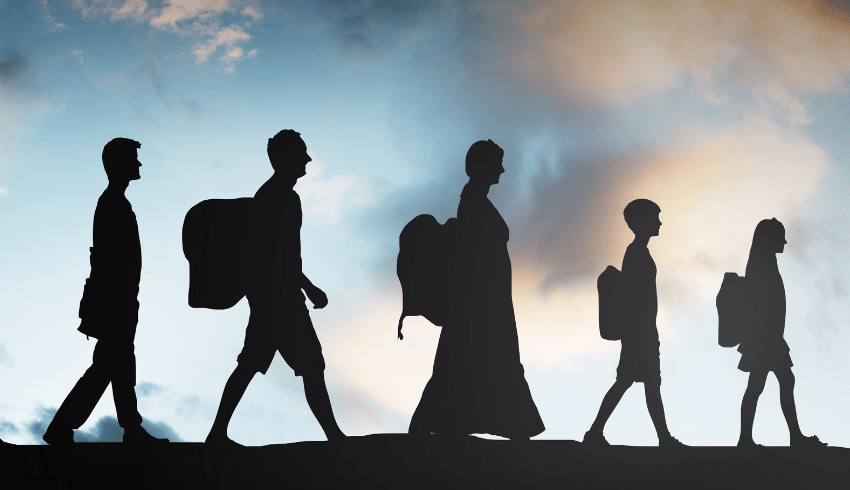
Through this enquiry, our children will answer the question: Should your circumstance determine your destiny? They will investigate the causes and impact of climate change, including drought, famine and the rising cost of living, and explore how these can lead to migration and displacement. Children will compare the human and physical features of the UK, Italy and Syria, using the Human Development Index and measures such as life expectancy, income and level of education to understand the differences between developed and developing nations. They will also learn about trade and Fairtrade, why ports such as the Port of Tyne, Port of Liverpool and Port of Grimsby are important, how natural resources are distributed around the world, and how the Prime (Greenwich) Meridian and time zones work. Throughout the enquiry, children will express balanced opinions about the issues surrounding displacement and refugees, using sources of evidence to support their ideas.
Our enquiry begins by welcoming members of the Nottingham Refugee Forum and migrants from our community to share their stories, with children preparing interview-style questions for the panel. Children will also take part in a British Red Cross workshop on empathy and migration, and visit Nottingham Contemporary.
This enquiry builds on EYFS, where children learned about their local community and the town in which they live, comparing it with other countries such as Brazil and Italy. In Year 1, they developed early knowledge of human and physical features while studying the four home nations. In Year 2, they explored different types of settlements across the world’s seven continents and evaluated the advantages and disadvantages of living in contrasting places. They also learned about different climates and habitats, describing these environments using appropriate geographical vocabulary.
In Lower Key Stage Two, this knowledge was deepened further. In Year 3, children learned about physical processes and human responses when studying natural disasters such as earthquakes, along with how charities support affected communities. In Year 4, they explored their local area, learning about topography, physical features and the impact of flooding on agriculture. In Year 5/6 Cycle 1, children built upon this learning by comparing Brazil and other South American countries to the UK, considering how climate change affects both regions and exploring the socio-economic differences between them.
Building on this secure foundation, children in Cycle 2 will apply their geographical knowledge to investigate how a country’s Human Development Index, alongside the effects of climate change and famine, can lead to migration and displacement from less economically developed countries. They will continue to develop their disciplinary understanding by using maps, atlases, GIS and six-figure grid references, and by collecting and analysing data to form and justify geographical conclusions. Our Year 5 children will return to the theme of displacement next year in Cycle 1, when they study British evacuees and Jewish families during World War II, and the human impact on the Amazon Rainforest.
In the secondary curriculum, pupils will extend this primary knowledge to develop a deeper understanding of global patterns of development and compare the physical and human features of a broader range of countries, such as Russia. They will draw on their understanding of their local area to examine global links through the concept of globalisation.
This enquiry is enriched through strong cross-curricular links.
– In Art, children will study how the artist Banksy uses his work to raise awareness of migration and displacement, interpreting the messages behind his pieces and explaining how his style has influenced their own artwork.
– In English, children will read texts including The Boy at the Back of the Class by Onjali Q. Raúf, No Ballet Shoes in Syria by Catherine Bruton, Welcome to Nowhere by Elizabeth Laird, the graphic novel When Stars Are Scattered by Victoria Jamieson and Omar Mohamed, and the picture books The Arrival by Shaun Tan and Wisp: A Story of Hope by Zana Fraillon. They will write a narrative based on The Boy at the Back of the Class, a balanced argument about climate change, a persuasive speech answering our enquiry question and a letter inviting the British Red Cross into school.
– In Science, children will study evolution and inheritance, exploring nature versus nurture through the lens of circumstance and destiny.
– RE and British Values will help children explore how religions and faith organisations, such as Christian Aid and Islamic Relief, respond to global issues, and what we can learn from people who resist discrimination and persecution, linking to protected characteristics.
– PSHE will support children to understand diversity and the benefits of living in a diverse community, to recognise and challenge stereotypes, prejudice and discrimination, and to debate topical issues such as migration respectfully.
– In PE, children will develop their understanding of resilience and determination by learning about Paralympians, such as Richard Whitehead, who have overcome adversity to determine their own destiny.
Our Spring Term Authentic Outcome
Children will create a piece of Banksy-style artwork highlighting the issues surrounding migration, forced migration and displacement, with an emphasis on the power and positivity of a diverse community. Their artwork will be displayed at Nottingham Contemporary, or another prominent place in our local area, over the Easter holidays, raising awareness of the New Roots charity and inviting our community to reflect on our enquiry question: Should your circumstance determine your destiny?
Our Enquiry Authentic outcome
As part of our sustainability and geography enquiry, our pupils have taken meaningful action to help our school and wider community understand how to reduce their carbon footprint. Using iPads and digital media skills, the children created a series of iMovie videos offering practical tips on sustainable living. These films will be shared on our school website to inspire positive environmental choices at home and beyond.
To extend their impact even further, the children have organised a public fundraising event in support of the World Wildlife Fund (WWF). They have launched a GoFundMe page and will be hosting a community fundraiser at our local Aldi store. Pupils will take along iPads showing their iMovies, alongside large display boards showcasing their research into climate change, endangered species, and the importance of protecting our planet.
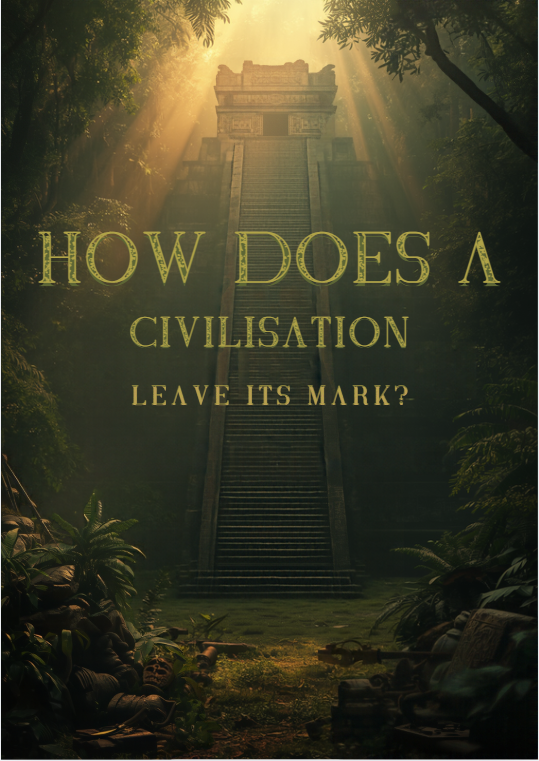
Summer Term Enquiry - How does a civilisation leave it's mark?

Through this enquiry, our children will answer the question: How does a civilisation leave its mark? They will learn about the Ancient Maya, a non-European civilisation that flourished around AD 900, exploring themes of hierarchy, education, worship, and change and continuity. Children will investigate Mayan gods, religion and traditions, and compare Mayan society with the Anglo-Saxons they studied in the autumn term, explaining similarities and differences using precise historical vocabulary. They will also learn that historical significance is often a personal decision, which means that not everyone agrees on who or what is significant, and that life in the past could be very different from place to place.
Our enquiry begins with our children becoming archaeologists on a tour of the Maya ruins. At each stop, they will work in teams to uncover the secrets of the lost cities of the Maya, generating questions about their discoveries and using secondary sources to find out more about what life was like in this civilisation. Children will also take part in a Mayan education trip at Cadbury World.
This enquiry builds on learning from EYFS and Key Stage One, where children learned about people who are significant to them, our community and the wider world. In Year 2, they studied a significant event from beyond living memory, the Great Fire of London, analysing its impact on the modern world.
As children moved into Lower Key Stage Two, they explored ancient civilisations and gained a deeper understanding of how societies were organised, what people believed, and how these beliefs influenced daily life. In Year 3, they learned about the Ancient Greeks and the significant people, events and ideas that defined their culture. In Year 4, they studied the Romans and the Ancient Egyptians, making comparisons between these two overlapping civilisations. They also began developing key historical skills, such as questioning, analysing evidence and recognising change over time, which they will continue to apply throughout this enquiry.
This knowledge is extended further in Year 5/6. Earlier in Cycle 2, children studied the Anglo-Saxon and Viking invasions of Britain, deepening their understanding of cause and effect, significance and the ways historians construct interpretations of the past. In this enquiry, they will apply their disciplinary understanding to a new historical context, using the Ancient Maya to provide a contrast with British history. Our Year 5 children will go on to revisit significant periods of British history beyond 1066 in Cycle 1 next year, learning about the impact of the monarchy on society and the rise of feminism.
In the secondary curriculum, our pupils will carry this strong foundation forward as they discuss and debate historical concepts such as society, empire, worship and monarchy, which they have begun to explore at Rivendell. They will continue to investigate continuity and change, and construct defendable, evidence-based claims about the past.
This enquiry is closely supported by PSHE and DT, alongside other subjects.
– In PSHE, children will build a varied vocabulary for talking about their feelings, learn strategies for managing intense or conflicting emotions, and understand the importance of talking to a trusted adult. Year 6 will also be supported with their transition to secondary school.
– In DT, children will explore the tradition of Mayan weaving to make their own Mayan worry dolls, linking with their PSHE learning about managing emotions. They will also learn to prepare and cook Mayan tortillas.
– In Art, children will design and paint Mayan masks for celebration, battle and death. Inspired by Frida Kahlo, who expressed her emotions through her paintings, they will choose an emotion to show through their own mask.
– In English, children will read texts including Oh Maya Gods! by Maz Evans and The Curse of the Maya by Johnny Pearce. They will write narratives based on these stories, a biography of Frida Kahlo, and an explanation text linked to their science learning.
– In Geography, children will name and locate countries in North and South America using maps, atlases and digital mapping.
Our Summer Term Authentic Outcome
As the culmination of our enquiry, our children will act as historians and anthropologists to prepare a “Civilisation Preservation Bid” for UNESCO. In their bids, they will explain why the Maya civilisation still matters today, what legacy it has left behind, and why it should continue to be protected and studied.
This outcome links closely to our Learning to be a Rivendellian programme, encouraging children to think about diversity, sustainability and the world today, including how we judge the reliability of information in an age of AI and “fake news”.