
Curriculum
Our Year 4 Curriculum
Within Year 4, our curriculum is taught across the year through our three enquiries. The enquiries all have an overarching question which the children work towards answering through an authentic outcome. Our enquiries are developed by driving and enhancing subjects.
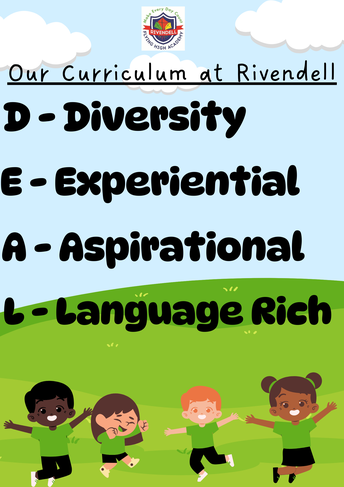
In addition, our enquiries connect to our DEAL curriculum principles and shape the way the enquiries are planned and delivered.
Our Year 4 Enquiries for 2025-26
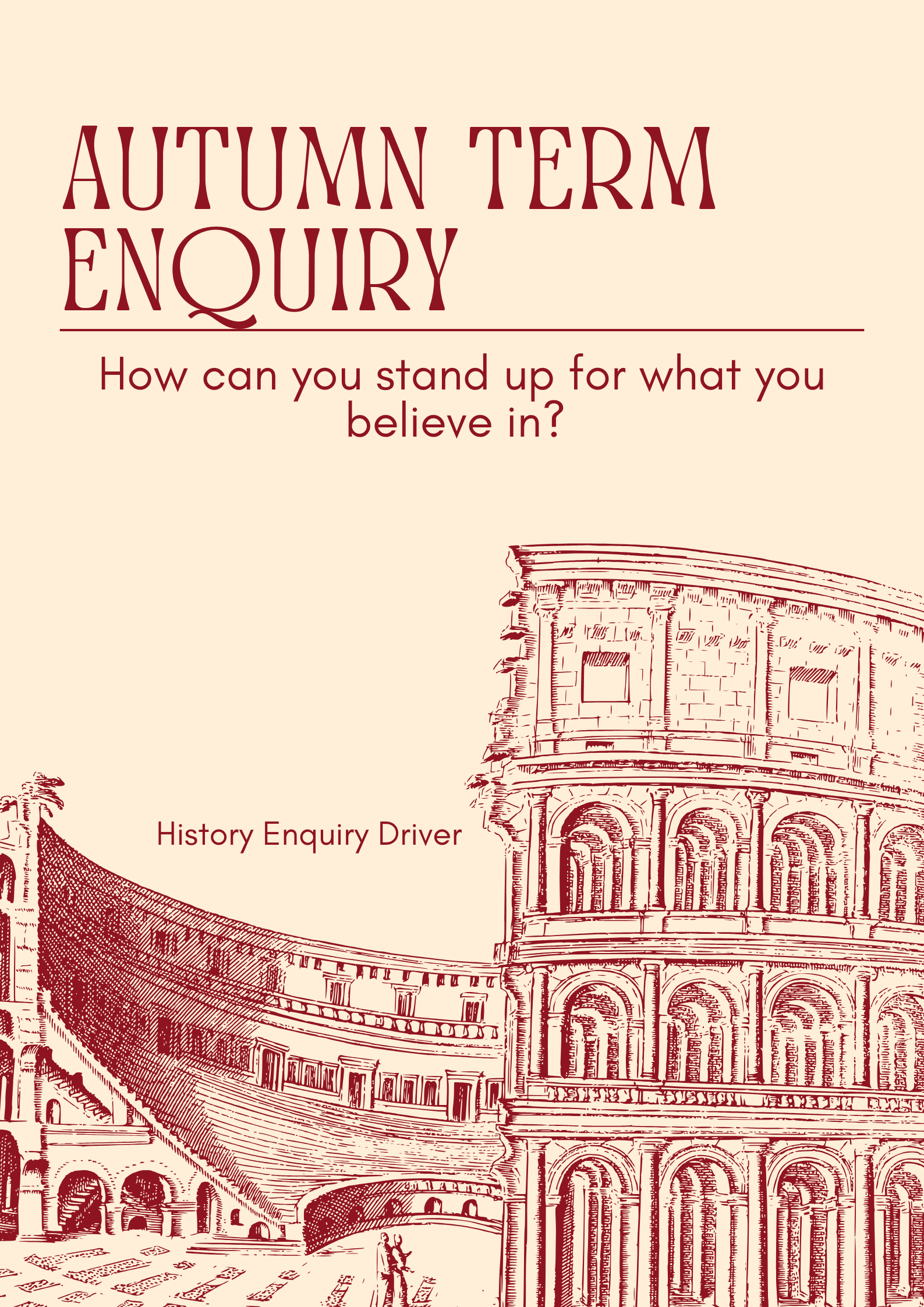
Autumn Term - How can you stand up for what you believe in?
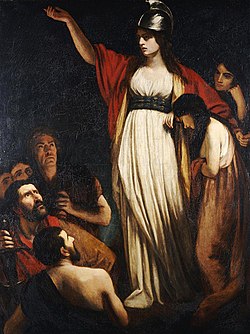
Through this enquiry, our children will deepen their understanding of ancient civilisations by exploring the Roman invasion of Britain and the lasting impact of Roman rule on British society. This builds on their previous learning in lower key stage two, where children studied prehistoric Britain from the Stone Age to the Iron Age, developing an understanding of early settlements, tools, and community life. They have also explored key historical concepts such as monarchy, cause and effect, and how leadership can shape societies. From EYFS, children have begun to learn about countries within Europe, including Italy, and understand that Mount Vesuvius is located there, laying early geographical foundations for this study.
Building on this learning, children will examine themes of resistance and belief by studying the Roman invasion in more depth. They will learn about significant historical figures such as Claudius and Boudicca, exploring different perspectives on invasion, power, and rebellion. Children will investigate how Roman technology and culture influenced Britain, including the development of roads, towns, and systems of belief, and consider how these changes shaped communities and daily life.
As children progress into upper key stage two, they will continue to revisit and strengthen these concepts when studying periods such as the Anglo-Saxons and Vikings, the Ancient Maya, the Tudors, and World War history. These enquiries will further develop their understanding of justice, leadership, education, and equality. Knowledge gained from studying Roman resistance and cultural influence will support children’s broader schema of significance, community, and cause and effect across historical periods.
Children’s learning will be enriched through wider curriculum links. In PSHE, they will explore standing up for beliefs, respectful relationships, and the influence of peer behaviour, reinforcing ideas of community voice and moral courage seen in the Roman enquiry. In English, children will develop persuasive writing and scriptwriting skills through debate-based outcomes, allowing them to articulate viewpoints and arguments inspired by historical events and figures.
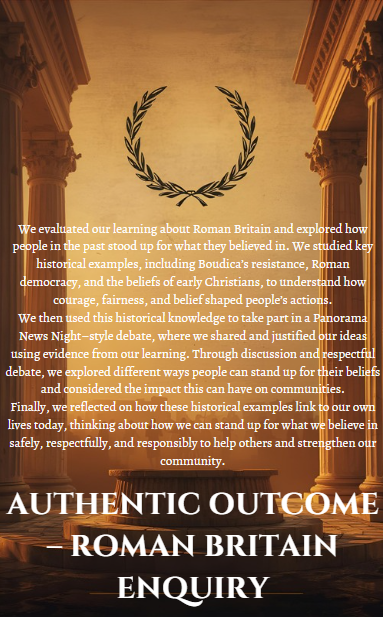
Our Autumn Enquiry Authentic Outcome
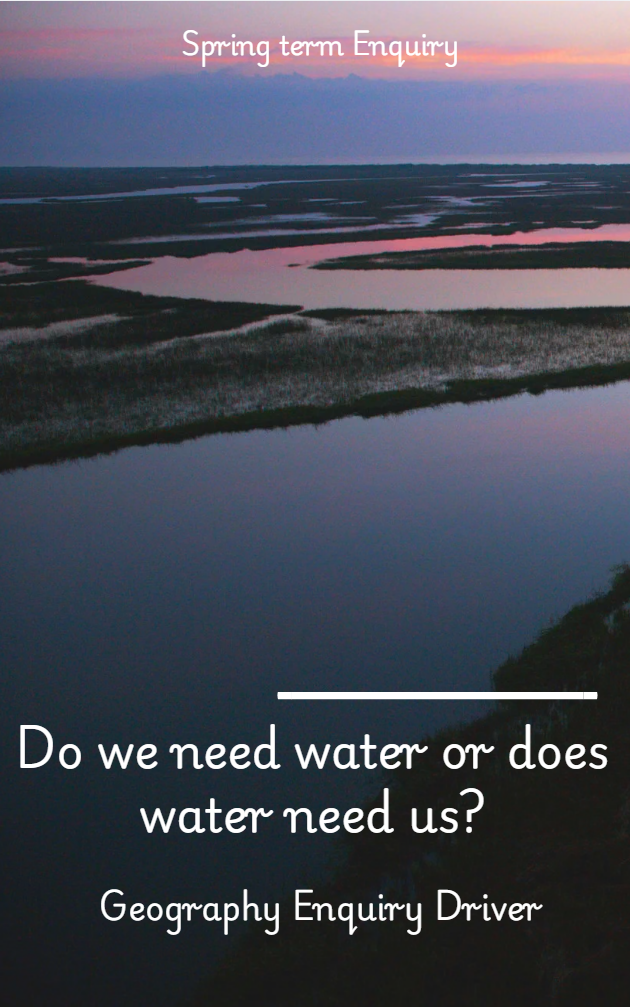
Spring Term Enquiry - Do we need water or does water need us?
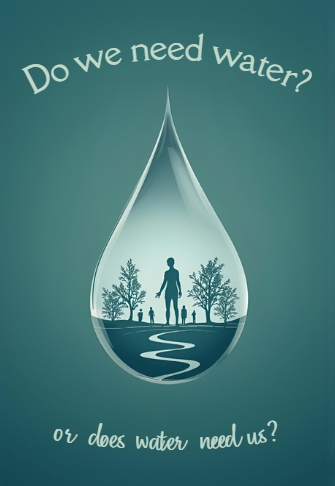
Through this enquiry, our children will deepen their understanding of the United Kingdom’s geography by building on prior knowledge developed across EYFS and key stage one. In earlier years, children identified the location of Great Britain and began exploring human and physical features of the UK, including surrounding seas and neighbouring countries in Year 2, and countries within the UK in Year 1. The River Thames has been introduced previously in F1, F2, and Year 1, providing an early foundation that will now be developed further through comparison with other rivers. Children have also explored UK counties such as Nottinghamshire, Lincolnshire, Derbyshire, and Leicestershire, supporting a growing sense of locality and regional identity.
Building on this learning, children will explore key topographical features of countries and cities within the UK. They will study how bodies of water are used and valued, with a particular focus on comparing the River Trent and the River Thames to describe their functions, characteristics, and differences. Children will consider both human and physical geography, developing geographical language and comparative skills. Science will support this enquiry by enabling children to understand the water cycle, helping them explain how water moves through natural systems and why rivers are sustained.
As children progress further through key stage two, they will reactivate and apply this knowledge when learning about global geography. Understanding rivers and water systems will support their study of human and physical features in Manaus and the Amazon rainforest. Children will also explore the importance of the water cycle on a global scale and consider how climate change impacts countries around the world. This will include learning about drought, famine, and how environmental pressures can lead to human migration, strengthening their understanding of cause and effect.
Children’s learning will be enriched through wider curriculum links. In science, they will learn about states of matter and understand the role of evaporation and condensation within the water cycle. In art, children will study landscape artists who focus on water and natural environments, including Claude Monet, using these works to inspire their own artistic responses to landscapes.
Our Spring Enquiry Authentic Outcome:
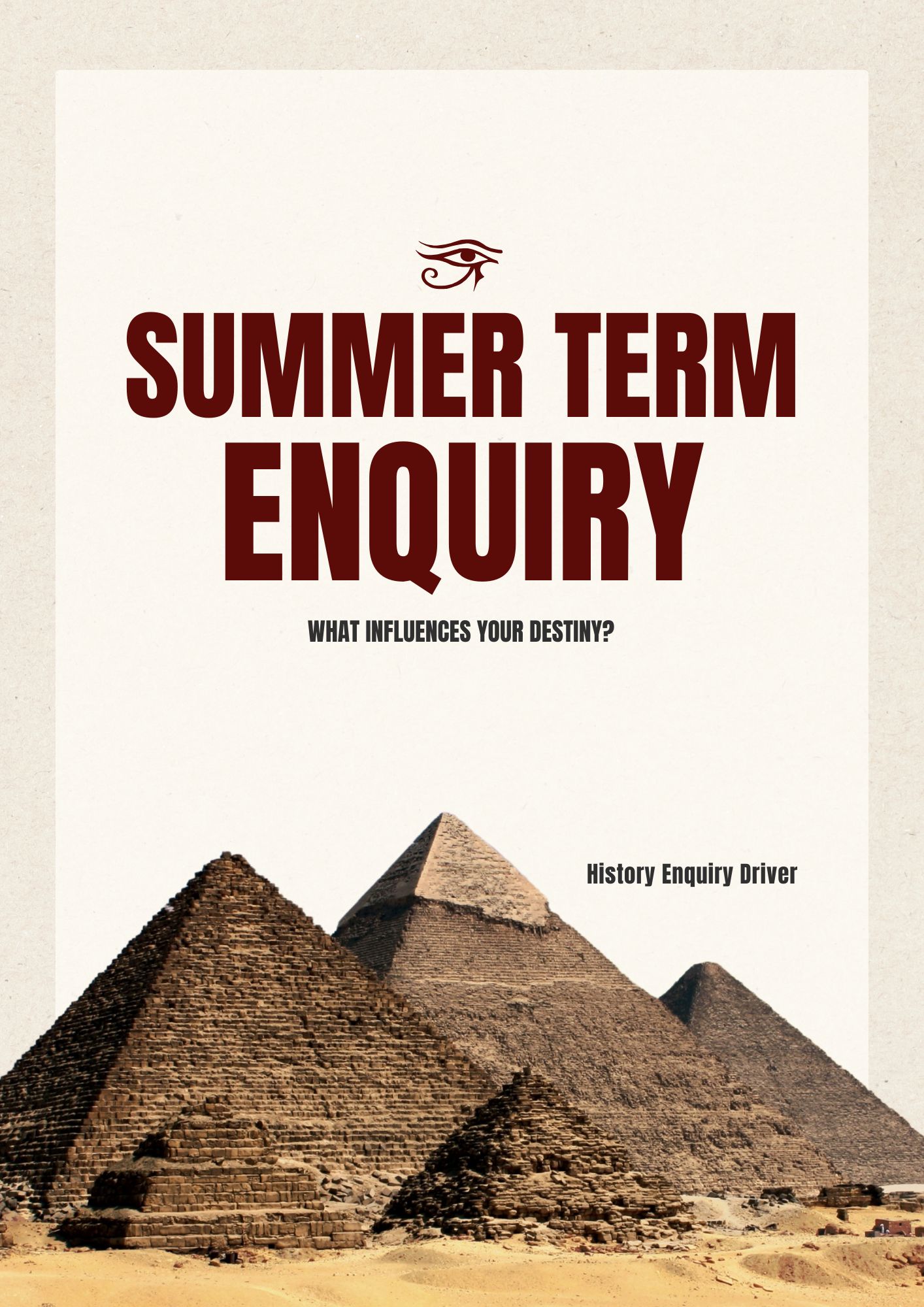
Summer Term Enquiry- What influences your destiny?
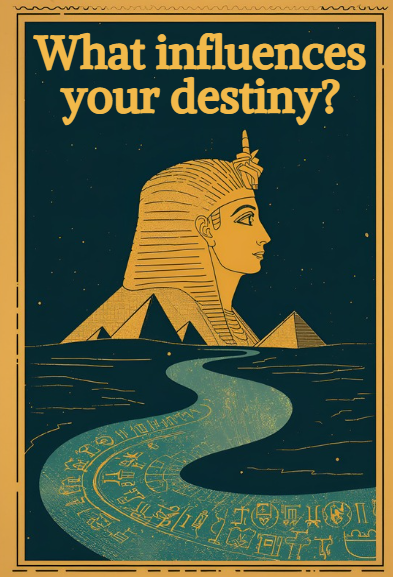
Through this enquiry, our children will build on their prior understanding of ancient societies and how early people lived, adapted, and believed. In previous years, children have learned about the development of tools, settlements, and belief systems through their study of the Stone Age, Ancient Greece, and Roman civilisation. They have begun to understand chronology and change over time, particularly how early societies adapted to their environments. From the Early Years, children have also explored the beliefs of the six main world religions, including religious practices linked to the celebration of life, providing an early foundation for understanding belief and ritual.
Building on this learning, children will study Ancient Egypt, focusing on how beliefs, rituals, and social structure influenced everyday life and ideas about the afterlife. They will explore how class, culture, and geography shaped people’s roles and opportunities within Egyptian society, considering why belief was so central to decision-making and legacy. Through this enquiry, children will deepen their understanding of how religion and power were intertwined in ancient civilisations. In art, children will analyse Egyptian funerary artefacts and sculpture, using these as inspiration to create their own decorated mask or three-dimensional piece, with a focus on form, detail, symbolism, and purpose.
As children move towards upper key stage two, this learning will support future enquiries where they will compare ancient civilisations, including the Ancient Maya. Children will continue to explore how societies were organised, what people believed, and how belief systems shaped daily life, leadership, and social structure. This progression will strengthen their understanding of significance, culture, and continuity across time.
Children’s learning will be enriched through purposeful cross-curricular links. In RE, children will explore beliefs about the afterlife, comparing Ancient Egyptian practices with modern-day faiths such as Hinduism, encouraging respectful reflection on similarities and differences in belief. In English, children will apply this understanding by writing a personal narrative from the perspective of an ancient Egyptian, drawing on historical knowledge to shape voice and viewpoint. In PSHE, children will reflect on aspiration, identity, and legacy, considering how culture, values, and beliefs influence both individual lives and wider communities.
Our Summer Enquiry Authentic Outcome: